Short answer. Free monitoring is enough if you have a handful of sites, 5-minute checks are fine and email or Telegram alerts cover you. Paid monitoring is worth it when you need 1-minute or 30-second checks, SLA reporting, multi-region checks, advanced alerting and analytics. The line is drawn by the cost of downtime: the more an outage minute costs you, the faster a paid plan pays for itself.
What free plans usually include
Most services, including enterno.io, offer free basic uptime monitoring. That is enough for personal projects, landing pages and small sites.
The line is simple: price one minute of downtime. If a downtime minute costs you nothing, the free plan is enough. If a minute costs real money — lost orders, a breached SLA — a paid plan pays for itself instantly.
- HTTP/ping availability checks at a 5-minute interval.
- A few alert channels — usually email and Telegram.
- A limited number of monitors (enterno.io gives 10).
- A short window of check history.
What you actually pay for
Paid features aren't "premium for premium's sake" — they map to concrete business needs.
- Frequent checks. 1-minute and 30-second intervals catch short outages a 5-minute check would miss.
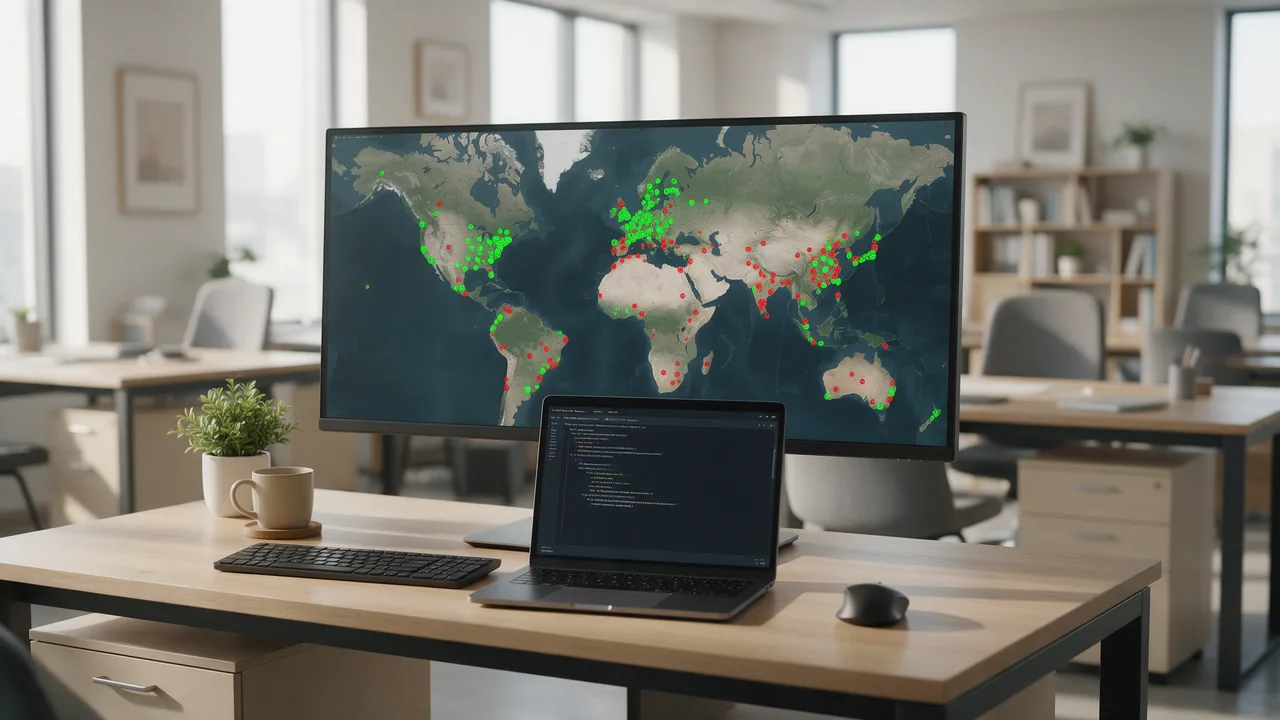
- Multi-region. Checking from several countries distinguishes a local network glitch from a real outage.
- Advanced alerts. PagerDuty, Jira, webhooks, escalations, on-call.
- SLA and reporting. Documented uptime for your clients.
- Long history and API. Trend analytics and dashboard integration.
Free vs paid at a glance
| Parameter | Free | Paid |
|---|---|---|
| Check interval | 5 min | 1 min / 30 sec |
| Monitor count | Dozens | Hundreds |
| Alert channels | Email, Telegram | + PagerDuty, Jira, webhook |
| Multi-region | Usually no | Yes |
| SLA reports | No | Yes |
| History | Short | Long |
When free is enough
- A personal site, blog, portfolio or small landing page.
- A 5-minute outage doesn't cost you money.
- Knowing that it went down is enough, without complex escalation.
- You are trialing a service before buying.
When it's time to pay
- The site makes money and every outage minute is a loss.
- You need 1-minute checks and fast response.
- You promise clients an SLA and must prove it.
- Your team works on-call and needs PagerDuty/Jira escalations.
Example. An online store with 30 pages and a promised 99.9% SLA fits a 1-minute interval plus Telegram alerts — the Pro tier at most services. With a typical order value and dozens of orders a day, even 10 minutes of unnoticed downtime on the checkout page costs more than a yearly subscription, so skimping on the interval here doesn't pay.
Where enterno.io fits
enterno.io gives an honest free start: 10 monitors, 48+ free diagnostic tools, alerts to Telegram, Slack, email and webhook. As the project grows, the upgrade is smooth: Explorer at 299₽, Starter at 490₽, Pro at 1490₽ with 1-minute checks, Business at 3990₽ with 30-second checks. Ruble-card billing, a REST API and an MCP server are included. It isn't the "one right" choice — but it is convenient if local billing matters.
For more, read the website monitoring guide, the piece on uptime and SLA, and the service comparison in our 2026 review.
FAQ
Can I get by on free monitoring alone?
Yes. For personal projects and small sites, a free plan with 5-minute checks and Telegram alerts is usually enough.
Why is a 5-minute interval worse than 1-minute?
A short 2-3 minute outage may be missed entirely by a 5-minute check, whereas a 1-minute check will catch it and send an alert.
What does multi-region checking give me?
It helps distinguish a real site outage from a local network or ISP issue in one region — your site might be reachable from Russia but down from Europe.
Is it worth paying for SLA reports?
If you promise clients a contractual availability level, yes — documented uptime protects you in disputes.