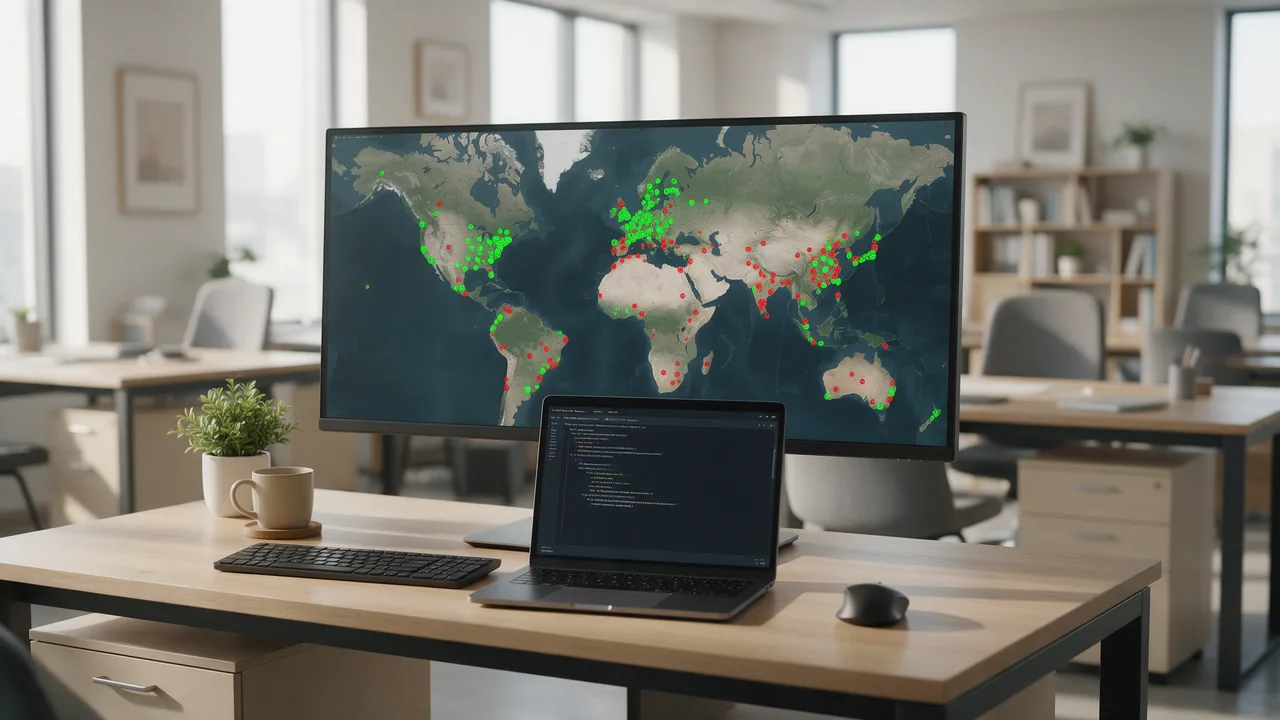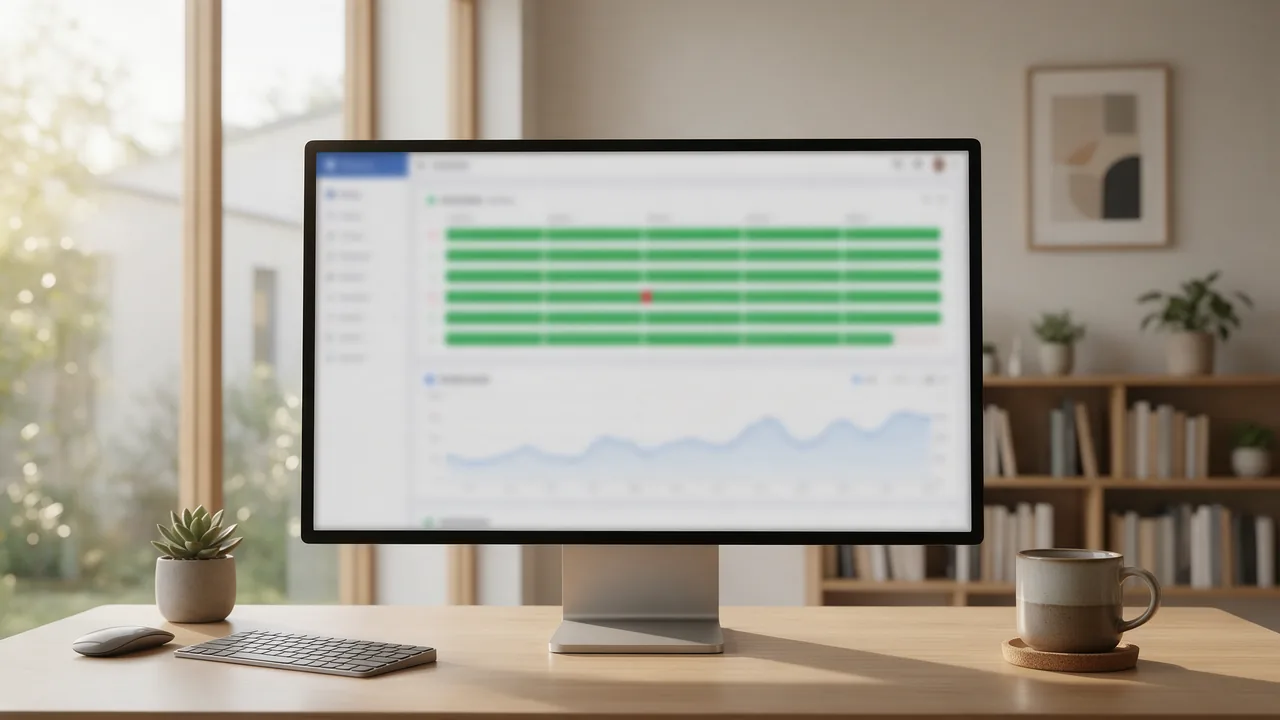
Short answer. An MCP server lets an AI assistant run availability, SSL, DNS, and security-header checks on its own. You write a request in plain language — Claude or Cursor calls the right diagnostic tools, gathers the results, and produces an analysis. That speeds up incident investigation and removes the manual tool-by-tool grind: one chat instead of ten browser tabs.
Why monitoring needs MCP
Classic monitoring answers "is it up or down" and fires an alert. But once the alert lands, the manual work begins: check SSL, look at DNS, run the headers, verify redirects. Each step is a separate utility. An MCP server collapses these tools into one interface available to the AI assistant, and the assistant runs the investigation for you.
MCP doesn't replace your monitoring system — it speeds up your response to its alerts. The alert says "it's down"; the MCP assistant tells you "why it's down" within a minute.
Which tools the enterno.io server exposes
The enterno.io diagnostic MCP server at https://enterno.io/mcp provides 16 tools. The most useful for monitoring:
| Tool | What it checks | Scenario |
|---|---|---|
| HTTP headers | Status, redirects, caching, security | Site returns the wrong status code |
| SSL/TLS | Chain, expiry, protocols | Certificate is expiring |
| DNS | A, AAAA, MX, NS, TXT, CNAME | Domain won't resolve |
| Ping | Reachability, loss, latency | Host is unreachable |
| Security scanner | HSTS, CSP, cookies, info disclosure | Config regression |
| WHOIS | Registration and domain expiry | Domain expiring soon |
Connecting to Claude or Cursor
Add the server to your client config. The block is the same for a remote connection over streamable HTTP:
{
  "mcpServers": {
    "enterno": {
      "url": "https://enterno.io/mcp"
    }
  }
}
In Claude Desktop that's claude_desktop_config.json; in Cursor it's the project's mcp.json. No key is needed for public checks. After restarting the client, the tools appear in the available list.
Investigating an incident with one prompt
Say an outage alert just landed. Instead of running utilities by hand, give the assistant this request:
Check the SSL chain and DNS records for example.com,
plus the security headers — pull it all into one report.
The assistant calls the SSL tool, the DNS tool, and the scanner in sequence, then merges the findings. If the certificate has expired, it flags it. If the NS records changed, it shows it. That cuts first-pass diagnostics from minutes to seconds.
Tip: frame the request as a task ("find the cause of the outage"), not as a command for a single tool. Then the assistant picks the right set of checks itself.
MCP plus continuous monitoring
MCP tools run one-off checks on demand. For ongoing observation you need full monitoring: enterno.io gives you 10 free monitors with alerts via Telegram, Slack, and webhooks. The combination is powerful — background monitoring catches the incident and fires the alert, while the MCP assistant instantly runs an analysis on the same domain.
For picking a continuous-monitoring system, read the uptime monitoring guide and the 2026 monitoring services comparison.
Security and limits
- The diagnostic tools make outbound checks against third-party URLs and are SSRF-protected — you can't probe an internal network address.
- Public checks are free and keyless; for private scenarios and the REST API a key is issued in your account.
- Results are cached briefly — keep that in mind when re-running checks right after a config change.
FAQ
Will the MCP server replace my monitoring system?
No. MCP answers one-off "check it now" requests. For 24/7 alerting you need monitors — enterno.io offers 10 for free.
How many tools are available over MCP?
The enterno.io server exposes 16 diagnostic tools: HTTP, DNS, SSL, ping, IP, WHOIS, SEO, security, and an AI-readiness score.
Do I need an API key for checks?
For public checks, no. A key is required for private scenarios and REST API access.
Which clients does this work in?
Claude Desktop, Cursor, Zed, and any MCP-compatible client. The config is identical — only the path to the settings file differs.
How does the assistant decide which tool to call?
From the tool descriptions and their input schemas. Phrase the request as a task and the model selects the right checks itself.