Short answer. In fintech, a minute of payment-gateway downtime is not just lost revenue — it is regulatory exposure, churn and reputational damage. The baseline monitoring stack: availability checks on payment APIs every minute, SSL expiry alerts at 14 and 3 days, multi-region probes, and instant notifications via Telegram, Slack, email or PagerDuty. The goal is to detect an incident before a single customer notices it.
Why fintech needs a different monitoring posture
Financial services operate under regulators and card schemes for whom availability is a formal requirement. A failed card authorization or a stuck acquirer webhook produces lost transactions that cannot be "replayed" later. Unlike a content site, here the cost of a monitoring false negative is at its maximum: if your system thinks everything is fine while payments fail, you learn about it from complaints, not from a dashboard.
The fintech rule: if a transaction is not explicitly confirmed, treat it as incomplete. The same applies to monitoring — the absence of an alert does not mean "everything works".
What exactly to track
- Payment API availability — create-payment, status and refund endpoints, checked over HTTP with an expected response code.
- Response time — rising latency often signals degradation before a full outage.
- SSL certificates — an expired cert on a payment page instantly blocks checkout in every browser.
- DNS resolution — delegation errors and missing records break API access entirely.
- Webhooks — inbound notifications from banks and PSPs are critical for finalizing operations.
Monitoring priorities by object type
| Object | Check type | Recommended interval | Criticality |
|---|---|---|---|
| Payment API | HTTP | 30 seconds | High |
| Payment page (SSL) | SSL | 1 minute | High |
| Customer dashboard | HTTP | 1 minute | Medium |
| Payment domain DNS | DNS | 5 minutes | Medium |
| Marketing site | HTTP | 5 minutes | Low |
SSL control: 14 and 3 days
An expired certificate on a payment domain is unacceptable. In enterno.io the warning thresholds are set to 14 days (warning) and 3 days (critical) before expiry — enough lead time to renew calmly and avoid a 3 a.m. incident. Alerts arrive in the same channels as downtime notifications.
Multi-region checks
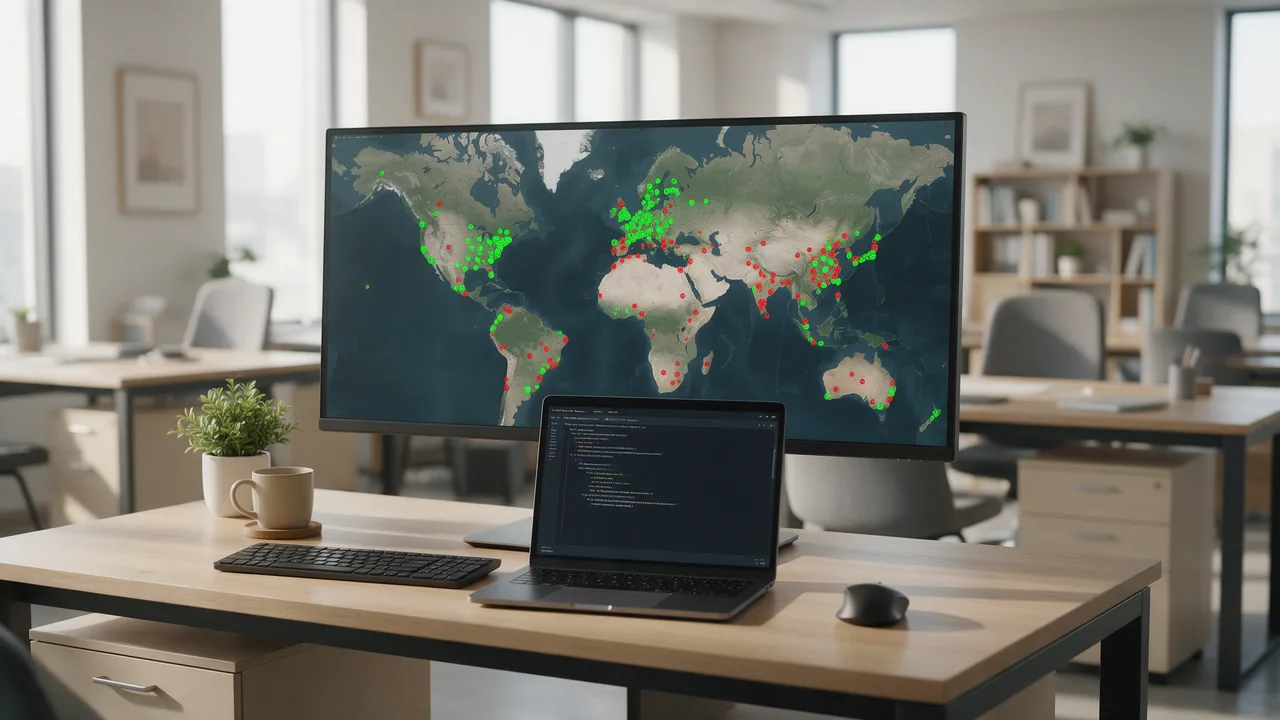
Fintech customers are geographically distributed, and a routing problem in one region is not always visible from another. enterno.io supports checks from Russia (ru-msk), Europe (eu-de) and the US (us-east). The free plan covers the Russian region only; paid plans unlock all three, letting you tell a local network glitch apart from a real outage.
SLA and check intervals
The free plan offers 10 monitors at a 5-minute interval — fine for a prototype or non-critical surface. A production fintech environment needs a 1-minute or 30-second interval, available on paid plans. The shorter the interval, the faster the detection and the more accurate the real uptime figure for SLA reporting.
Alerts and escalation
The delivery channel determines how fast the team responds. enterno.io supports Telegram, Slack, email, webhook, PagerDuty and Jira. For an on-call rotation, route critical monitors to PagerDuty (a phone call) and informational ones to a team Telegram channel.
Public status page
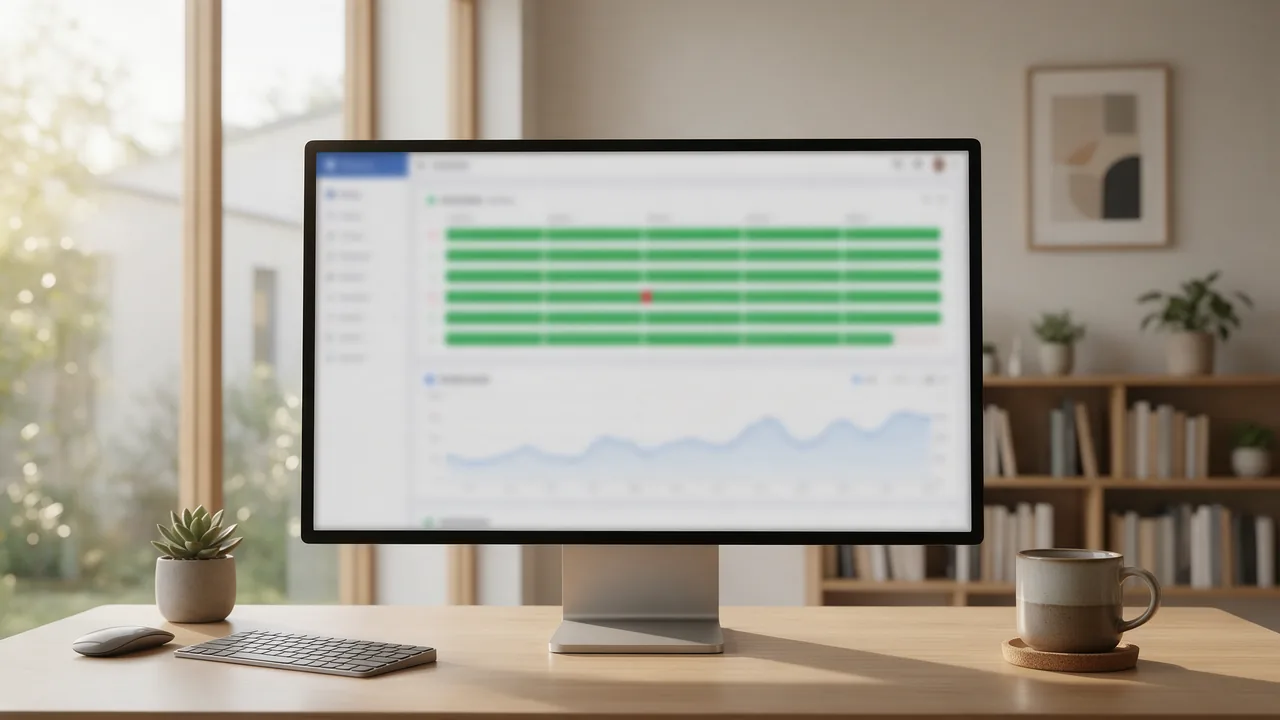
Transparency builds trust. A public status page shows current service state and incident history without a support call. For fintech it also reduces support load during a mass acquirer outage.
FAQ
What check interval does a payment API need?
At least 1 minute, ideally 30 seconds in production. The free plan's 5-minute interval suits only secondary endpoints.
Will monitoring prevent checkout blocks from SSL issues?
Yes, with thresholds configured. enterno.io warns 14 and 3 days before expiry, leaving room to renew.
Can I monitor a bank webhook?
Indirectly — via heartbeat monitoring: your handler pings enterno.io after a successful processing, and a missing signal triggers an alert.
How does multi-region monitoring differ?
It separates local network problems from a real failure. If a service is down from Russia but answers from the EU, the issue is routing, not the service itself.
Start by configuring monitors for your payment endpoints on the uptime monitoring page. Useful reads: uptime monitoring guide, SSL certificate monitoring, multi-region monitoring and the online SSL checker.