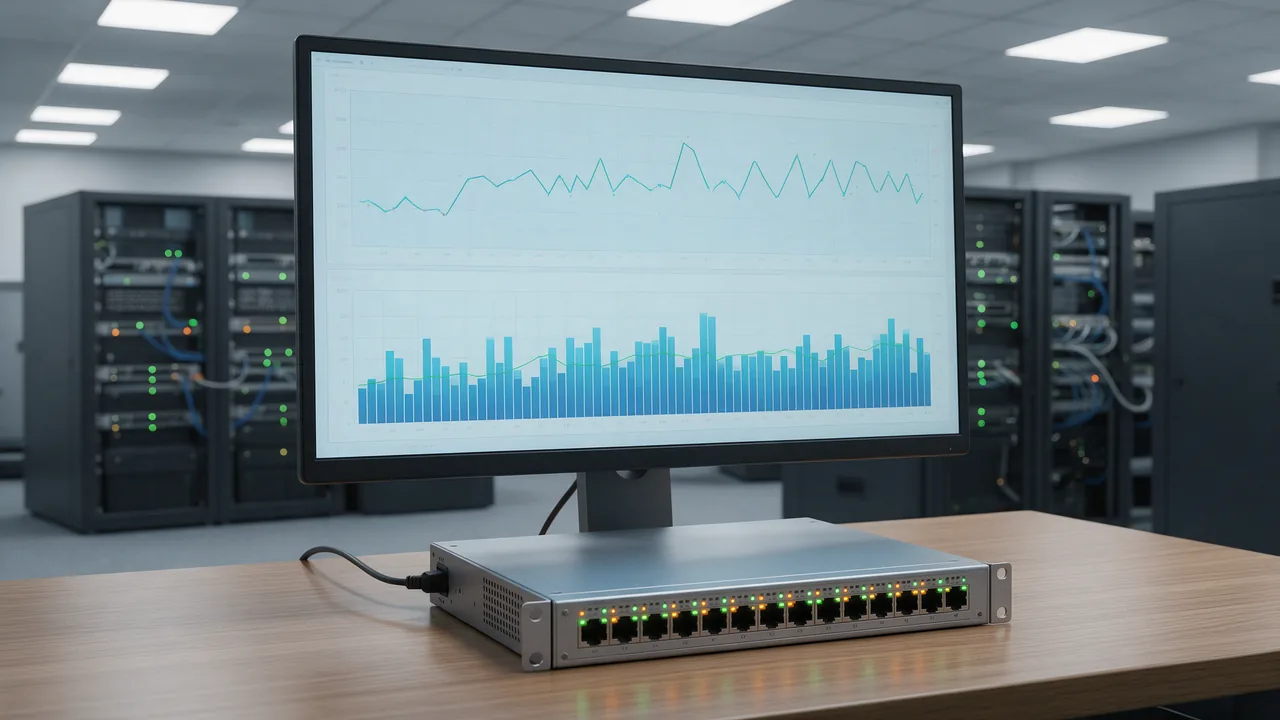
Short answer. Synthetic monitoring runs controlled checks of a service at a fixed interval from fixed points: it answers "is the service working right now?". RUM (Real User Monitoring) collects real performance metrics from live visitors: it answers "how well does the service perform for my actual users?". They are not competitors but two halves of the full picture — you need both.
What synthetic monitoring is
Synthetic runs predefined checks: an HTTP request to an endpoint, an SSL check, ping, DNS — at a fixed interval from controlled points. Its main strength is being proactive: checks run even when not a single user is on the site, e.g. at night. This catches incidents before the first customer is hurt and measures uptime accurately for an SLA.
What RUM is
RUM collects metrics straight from real visitors' browsers: Web Vitals (LCP, CLS, INP, FCP, TTFB). Its main strength is truthfulness: you see performance on real devices, networks and user geographies, not in a sterile lab. The downside — data appears only with traffic, and you cannot compute uptime from it.
Synthetic says "the service is reachable from Moscow". RUM says "25% of users on old Android and slow 4G load the site in 6 seconds". Both facts matter.
Comparison table
| Criterion | Synthetic | RUM |
|---|---|---|
| Data source | Controlled check points | Real visitors' browsers |
| Works without traffic | Yes (proactive) | No (needs visitors) |
| Suitable for uptime/SLA math | Yes | No |
| Shows real user experience | Partially | Yes |
| Device and network coverage | Limited | Full, as it happens |
| Early incident detection | Yes | Lags behind |
When to use which
- Uptime and SLA — synthetic only: it needs no traffic and gives a deterministic basis for the math.
- SSL, DNS, API availability control — synthetic with a short interval and multi-region.
- Real speed for users — RUM: where it's slow, on which devices and in which regions.
- Release impact on perception — RUM before and after: did Web Vitals change for the real audience.
Why you need both
Synthetic catches a full outage at night but won't notice that for weak-4G users the site slowed down after a release. RUM shows the perceived degradation but won't wake you at 3 a.m. when there's no traffic. Only together do they cover both availability and quality.
How it works in enterno.io
enterno.io provides both halves. Synthetic — monitors of types HTTP, SSL, ping, DNS: 10 monitors free at a 5-minute interval, 1-minute and 30-second intervals on paid plans, multi-region Russia/EU/US, SSL thresholds at 14/3 days, and alerts to Telegram, Slack, email, webhook, PagerDuty, Jira. RUM — collecting real Web Vitals from visitors on the RUM page. So you see both "is the service alive?" and "how well does it feel to real people?" in one place.
FAQ
Can RUM alone replace synthetic?
No. RUM doesn't work without traffic and is unfit for uptime math. A nighttime outage simply won't be recorded.
Can I get by with synthetic only?
For uptime, yes, but you won't see real speed for users on weak devices and networks. That's a blind spot.
What should count as uptime for an SLA?
Synthetic data: deterministic checks at a fixed interval from controlled points.
What metrics does RUM collect?
Web Vitals: LCP, CLS, INP, FCP, TTFB — real load and interactivity figures from visitors.
Combine synthetic and RUM: set up monitors on the uptime monitoring page and watch real metrics in RUM. Also: the monitoring guide, multi-region and a website check.