SEV1–SEV4 is a team-defined scale of incident impact. A broad critical failure can be SEV1; a serious partial degradation SEV2; a bounded issue with a viable workaround SEV3; a low-impact defect SEV4. Agree on your own thresholds before an outage. enterno.io does not assign these four labels natively to every incident.

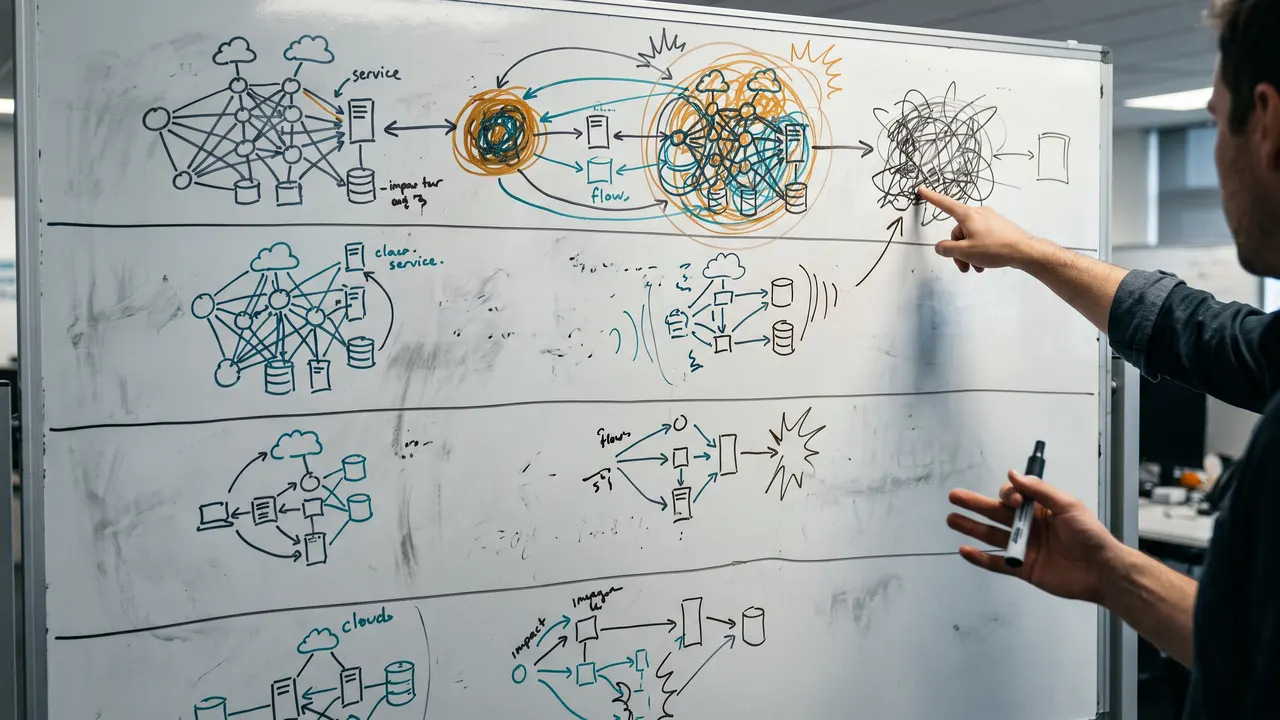
Several failing probes may describe one failed dependency, while a green homepage can hide broken checkout. Count affected user actions before counting alerts. Atlassian's severity guidance bases classification on impact, and its response handbook connects severity with who responds and who communicates. The matrix below is a draft operating policy for a web service, not an official cross-industry standard.
Classify by user impact
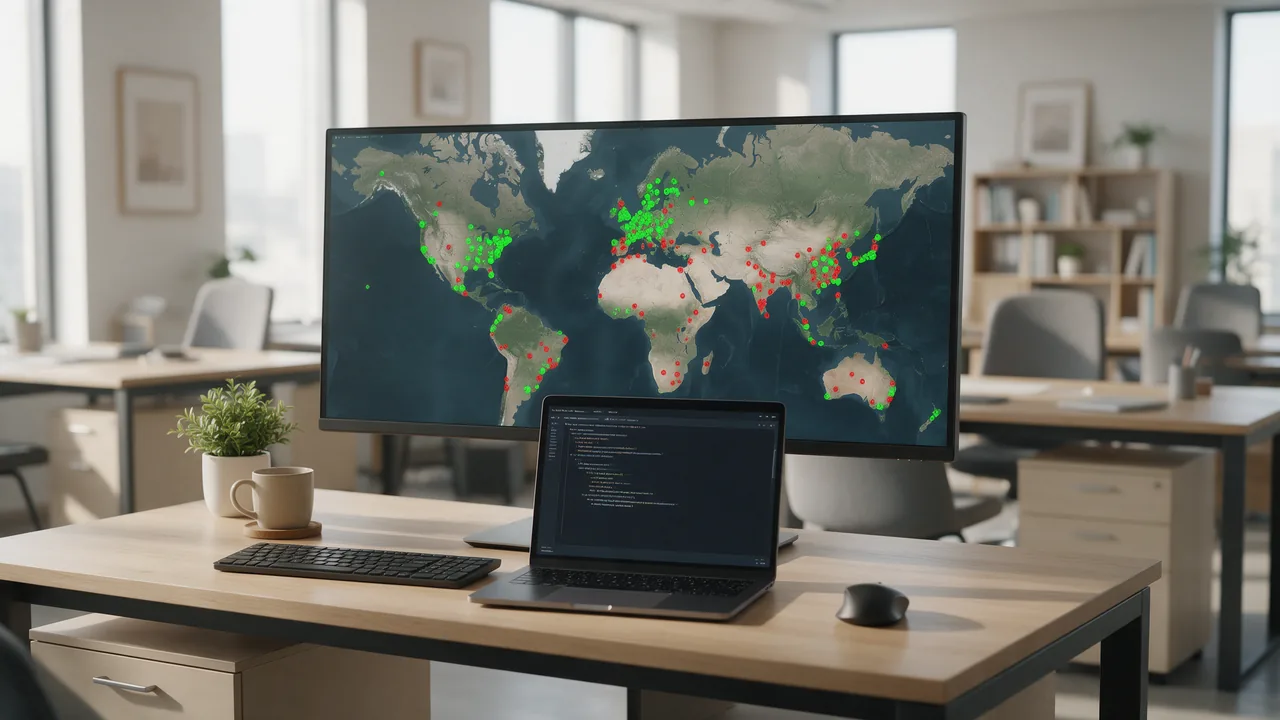
Identify the failing action first: sign-in, purchase, API write or public read. Measure affected requests, regions and duration. Ask whether a safe workaround exists and whether data may be lost. If the scope is unknown, choose a provisional higher response level until evidence narrows it. A regional fault can still harm customers; see the multi-location investigation for a way to record partial impact.
| Level | Web-service example | Response | External update |
|---|---|---|---|
| SEV1 | Login and payment fail for most customers, or data integrity is at risk | Page owner, backup and incident lead immediately | After impact confirmation, then at agreed intervals |
| SEV2 | Payments fail for a significant segment or a major region | Primary and backup per policy | When customers can see the failure |
| SEV3 | Secondary function degraded, safe workaround available | Named owner within business process | Depends on audience and contract |
| SEV4 | Cosmetic defect with no critical-path failure | Owned backlog item | Usually no separate outage notice |
This table does not set a universal response SLA. Contract terms and the organization's risk tolerance decide deadlines. Atlassian Developer's app matrix is an example of one organization's choice, not a set of numbers to copy. HTTP 503 on documentation and HTTP 503 on a payment API have different consequences.
Raise or lower severity as evidence changes
Assign a provisional level on the first incident call. Reassess after application logs, user support reports and external probes establish scope. Escalate when more regions fail, payment records become uncertain or a supposed workaround proves unsafe. Downgrade when independent evidence establishes lower impact. Record the time and reason. Severity should describe the incident, not protect a weekly report from a red mark.
14:05 — SEV2: payment failures at one provider; scope unclear
14:11 — SEV1: a second provider fails and most orders are affected
14:38 — SEV2: fallback checkout works; some orders still need review
This is a fabricated teaching scenario, not an enterno production event. Map each level to responders in your escalation policy. A public update should describe impact, not rely on the SEV code alone. The first-15-minutes runbook gives the initial investigation order. enterno's status pages display service state, while its `info`, `warning` and `critical` notification preferences are not an automatic SEV1–SEV4 conversion.
The same symptom can mean different impact
HTTP 503 on a low-use help page usually differs from a failed purchase API. Yet a help page may become critical if it is the only route for account recovery instructions. A payment error affecting two percent of customers could still be severe if it blocks every order in one country or a major enterprise account. Forty percent errors on an unused test endpoint can be lower impact. Percentages without the purpose of the route mislead. List critical user actions and their owners before the first incident.
For payments, count more than HTTP status. A technical 200 with a provider decline inside JSON is not a successful purchase. If money is captured without a confirmed order, data integrity and manual reconciliation can raise severity even at low traffic volume. For sign-in, distinguish new sessions from work by customers already authenticated. For write APIs, consider lost or duplicate records. The critical question is what users can do and what they may lose.
Use four impact questions before choosing the number
Ask about reach, feature criticality, safe workaround and lasting consequences. Reach means affected users or transactions, not red monitor count. Feature criticality asks whether checkout, authentication or access to stored data is blocked. A workaround counts only if it is actually available to the affected customers and does not create another risk. Lasting consequences include data loss and partner obligations. Write one sentence for each axis. Mark unknown values as unknown rather than replacing them with optimistic guesses.
A small team does not need a complicated numerical score. Four plain fields in the incident record reduce arguments about whether an event “feels like SEV2”. When scope is uncertain, assign a provisional response level based on the worst plausible customer impact and name the test that could reduce it. For example: “Payment impact unknown; inspect the last ten attempts from two regions.” That creates a decision path. Leaving severity blank often leaves team ownership blank as well.
Connect each level to a responsible person
Classification should change the response. For SEV1, name an incident lead, operations owner and communications owner. A three-person team may combine roles, but cannot omit them. For SEV2, start with the service on-call engineer and backup while determining reach; add the incident lead when a critical dependency is involved. For SEV3, name an owner and a next review time in the ordinary workflow. SEV4 still needs an owner and a condition for reconsideration; otherwise it becomes an untracked pile of tickets.
Do not copy another company's update cadence as a universal rule. If customers see a failure, publish the next update time and meet it even without a new root cause. For a narrowly affected internal feature, an addressable notice to that audience may be better than a broad public incident, subject to contract and product expectations. Keep an internal channel separate; unverified hypotheses and access details should not appear on a public status page.
Separate alert importance from incident severity
An enterno alert marked `critical` can describe one failed monitor while the overall incident is SEV3 because customers have a tested workaround. Several `warning` alerts can combine into SEV1 if they jointly break checkout. A recipient's `min_severity` preference controls delivery of individual events, not business-impact classification. Do not use it as the sole SEV mapping. The incident record should have separate lines for observation, customer impact and response decision.
Quiet hours need similar care. If a person only receives critical notifications overnight, several warning events could wait while the overall customer effect becomes severe. A monitor of the critical user path and a tested backup route reduce that gap. Run a safe drill before an overnight change. The example matrix above is not a statement about every customer's plan or operational contract.
Revisit the matrix after recovery
Compare the initial classification with measured impact. If an event labelled SEV2 became a broad outage, identify the missing signal: perhaps the monitor tested the homepage but never attempted checkout. If the team repeatedly declares SEV1 because scope is unknown, improve the measurement of affected transactions. If a low-level issue sat without an owner, repair the ownership rule. The matrix should help people make decisions under uncertainty, not become a retrospective grade of individual responders.
Preserve each severity change. An early estimate may be wrong with limited data; that is acceptable when a later check corrects it. Rewriting the original record as if the team knew the final cause immediately destroys learning. A postmortem needs the sequence of what was known, when it was learned and why priority changed. That evidence supports better monitors and communication.
Exercise the matrix on three different failures
First, new users cannot sign in while existing sessions still work. The homepage monitor stays green. If sign-in is required for checkout, assign a high response level and page the authentication owner. Estimate reach from attempted logins, not from the size of the full account database.
Second, one regional CDN node returns 503 while other regions work. Its impact depends on actual customer traffic and whether a safe alternate route exists. A region representing a small share of global traffic may still be the company's primary market. Record failed user actions and the time needed to route around the problem.
Third, an API returns 200 but creates duplicate orders. HTTP availability looks healthy while financial and data integrity risk is high. Stop unsafe writes, preserve evidence for reconciliation and set severity by the possible consequences. Revise it when the number of affected orders is known. These examples are hypothetical checks of the matrix, not reports of enterno incidents.
How we made this matrix
We compared primary Google SRE and Atlassian guidance with enterno's `min_severity` field and incident model. The matrix is an original team template. The three timestamps above are invented examples and are labeled as such. The initial content brief asked for a matrix extracted from public postmortems; we did not have a defensible postmortem sample and do not claim one. SerpAPI captured Google US and Yandex Moscow. Wordstat region 225 estimated 13 searches for the broader Russian phrase and no estimate for the exact SEV1 phrase.
FAQ
Does SEV1 always mean a complete outage?
No. A widespread payment or data-integrity failure may be critical even when the homepage loads.
Can severity change during an incident?
Yes. Record the evidence, time and owner of each change.
Is SEV the same as ticket priority?
No. SEV describes current incident impact; a future fix may have a different planning priority.
What SEV is a regional outage?
Measure affected users, failed function and available workaround. Name the region before assigning the level.